Steel vs. Aluminum Handrails:
Which Is Right for Your Project?
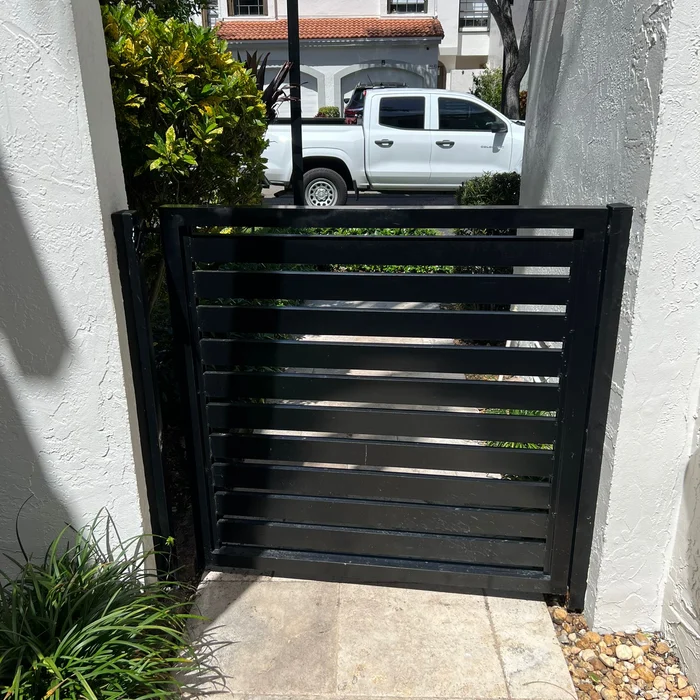
We fabricate custom handrails every week, steel ones, aluminum ones, stainless ones, and the question we hear most often from contractors, homeowners, and designers is: "Which metal should I use?"
The honest answer is: it depends on your environment, budget, load requirements, and finish preference. This guide breaks it all down so you can walk into your fabrication quote with a clear direction.
The Short Answer
Steel is stronger, weldable in more positions, and generally less expensive for structural applications. Aluminum is lighter, naturally corrosion-resistant, and ideal for coastal or exterior environments where steel would rust without proper coating.
Side-by-Side Comparison
| Factor | Steel | Aluminum |
|---|---|---|
| Strength | Higher tensile strength, better for heavy load | Adequate for residential/light commercial |
| Weight | Heavier, more structural integrity | ~3x lighter, easier handling and install |
| Corrosion Resistance | Requires coating, powder coat, or galvanizing | Naturally oxidizes into protective layer |
| Coastal/Marine Use | Not ideal without proper treatment | Excellent, preferred near saltwater |
| Weldability | Excellent, MIG, TIG, stick welding | Good, requires TIG or MIG with filler wire |
| Finish Options | Paint, powder coat, galvanize, raw patina | Anodize, powder coat, natural brushed |
| Cost | Lower material cost typically | Higher material cost, lower maintenance |
| Florida Code Compliance | Both meet FBC requirements when properly specified | Both meet FBC requirements when properly specified |
When to Choose Steel
- Interior staircases or handrails away from salt air
- Commercial or industrial applications requiring high load capacity
- Projects where welded joints need to be fully flush and ground smooth
- Budget-sensitive projects, raw steel is typically cheaper per linear foot
- Custom artistic or architectural designs with complex bends and curves
When to Choose Aluminum
- Exterior railings within a mile of the ocean
- Pool decks, docks, and marine environments
- High-rise or rooftop terraces exposed to wind and moisture
- Projects requiring lightweight material for upper-floor installation
- Long-term low-maintenance priority, aluminum won't rust without coating
What About Stainless Steel?
For premium coastal or marine projects, 316 stainless steel is often the best of both worlds, the strength of steel with corrosion resistance close to aluminum. It costs more per linear foot, but eliminates the coating maintenance concern entirely. It's the standard for dock handrails, railing hardware, and high-end architectural work.
Grade 304 vs. 316 Stainless
304 stainless is suitable for interior or mild exterior use. 316 stainless (marine grade) contains molybdenum, which resists chloride corrosion, essential in South Florida's saltwater environment. We always recommend 316 for anything within 5 miles of the coast.
Florida Code Basics for Handrails
Under Florida Building Code Section 1014, handrails must:
- Be installed on at least one side of stairways with 4 or more risers
- Be continuous for the full length of the stair flight
- Have a graspable profile, circular cross-section 1¼" to 2" diameter, or equivalent
- Withstand a concentrated load of 200 lbs. applied in any direction at any point
- Return to wall or newel post, no open ends that can catch clothing or bags
Both steel and aluminum meet these requirements when properly engineered and installed. The material choice doesn't change code compliance, the design and attachment method do.
Not Sure Which Metal Is Right for Your Project?
We'll walk you through it, material selection, finish options, code compliance, and a firm price. No pressure, no obligation.
Get a Free Handrail QuoteThe Fine Edge Recommendation
For most South Florida interior projects, we recommend mild steel with powder coat, it's durable, customizable, and cost-effective. For exterior, coastal, or pool deck installations, we recommend aluminum or 316 stainless to avoid long-term coating maintenance.
Bring us your drawings or a photo of the space, and we'll recommend the right spec within 24 hours. We've fabricated both at every scale, from single-family residential to multi-story commercial buildouts across Miami-Dade, Broward, and Palm Beach County.