5 Things to Know Before Upfitting
Your Commercial Fleet
A well-upfitted commercial van isn't just organized storage, it's a mobile workshop that can save your crew 30–60 minutes per day in setup, tool retrieval, and end-of-day pack-up. We've built out vans for HVAC contractors, electricians, cable techs, and specialty trade teams across South Florida.
Before you commit to a design and start fabrication, here are the five things every fleet owner needs to have figured out.
Know Your Van First: Not Your Storage
Every van platform is different. A Ford Transit, Ram ProMaster, and Mercedes Sprinter all have different interior widths, floor track systems, and structural anchor points. What works in a Transit doesn't bolt into a ProMaster. We need to know the exact make, model, and year before we design anything, because we custom-fabricate to fit, not to the spec sheet of a generic kit.
Map Your Daily Workflow: Not Just Your Tools
The mistake most people make is listing every tool they own and asking us to store all of it. What you actually need to think about is: what do you grab first every morning? What gets pulled out at every job? What stays in the van all day? High-frequency items belong at waist height, center of the van, easy reach from the side door. Low-frequency items go in the back or on top. We build the layout around your workflow, not the other way around.
Decide: Steel, Aluminum, or Mixed?
Most commercial van upfitting uses either mild steel or aluminum for shelving and racking. Steel is stronger and cheaper, good for heavy equipment, compressors, generator mounts. Aluminum is lighter, which matters for payload capacity and fuel economy when you're running a fleet. Many builds use both: aluminum shelving for day-to-day storage and steel structural mounts for heavy equipment platforms. We'll recommend the right call based on your payload needs.
Plan for Power and Lighting
If you're running battery packs, inverters, compressors, or diagnostic equipment, your upfit needs to account for power routing. This means planning cable channels, mounting surfaces for electrical components, and ventilation for battery systems before fabrication starts, not after. We work alongside your electrician to make sure the metal structure accommodates everything, or we can refer you to a qualified 12V systems tech who works in our shop regularly.
Think About Security and Load Securing
Unsecured tools in a commercial van become projectiles in an accident. Any proper upfit should include: tie-down tracks on the floor (E-track or L-track), locking cabinet doors for high-value equipment, and a bulkhead or partition separating the cab from the cargo area. Florida doesn't mandate specific cargo securing laws for vans, but your liability insurer likely has requirements, and the right upfit satisfies both safety and insurance concerns.
From Our Shop: Real Van Upfitting Work

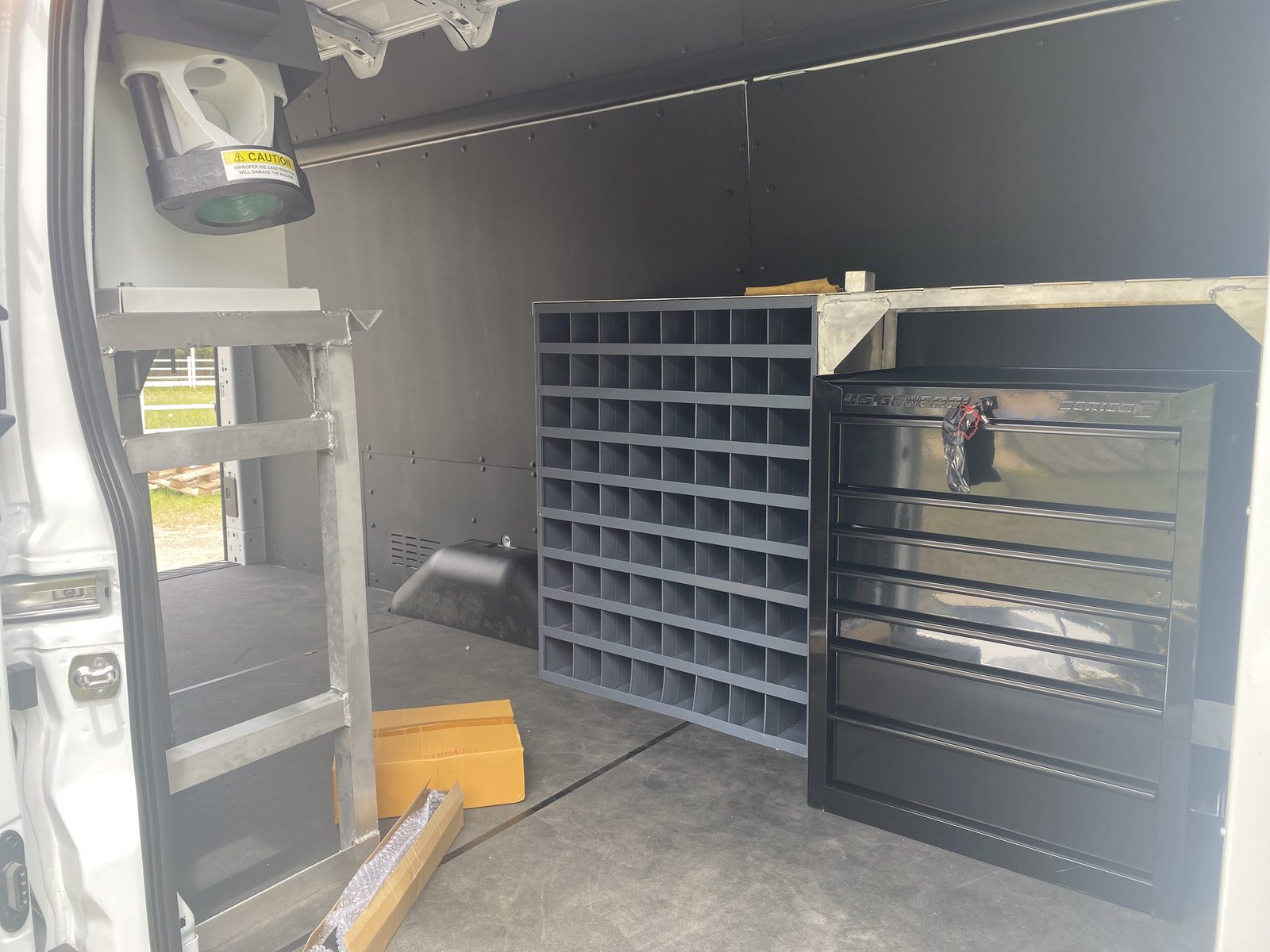
What a Fine Edge Upfit Looks Like
Our builds are fully custom-welded in our Hallandale Beach shop, then installed on-site or at our facility. We don't sell kits or off-the-shelf systems, every shelf, mount, and bracket is fabricated to fit your van and your workflow.
Typical turnaround on a single-van build is 3–5 business days depending on complexity. Fleet builds (5+ vehicles) get priority scheduling and volume pricing.
Ready to Upfit Your Van or Fleet?
Send us your van specs, a rough idea of what you need to store, and we'll get you a quote within 24 hours. No obligation.
Get a Van Upfitting Quote